
7 nights
From
£4,499
pp


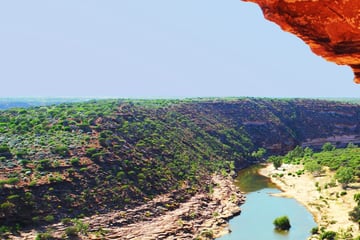
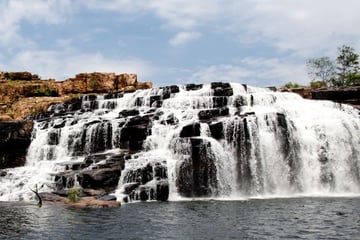

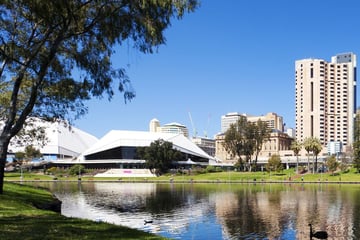


Australia is a genuinely vast and varied country — one week you could be watching red dust roll off the Outback horizon, the next you're barefoot on a beach so white it looks unreal, or wandering a city with one of the best food scenes on the planet. We've been planning Australian holidays for British travellers for over 20 years, and even after all that time, the sheer scale of the place still catches people out. There are exciting cities packed with culture and a genuinely thriving food scene, extraordinary and often bizarre wildlife you won't find anywhere else on Earth, and landscapes that shift completely every few hundred miles.
The challenge with a destination this big isn't deciding whether to go — it's knowing how to plan it properly. That's exactly where our specialist team comes in.

There's no way around it - Australia is a genuinely long way from the UK, so flying is the only realistic option. Most of our clients fly into Sydney, though a good number also choose Brisbane, Perth or Melbourne, depending on where their trip begins.
Non-stop flights between the UK and Australia are rare, and the one route that has offered it - Qantas' Boeing 787-9 Dreamliner service between London Heathrow and Perth, one of the longest non-stop passenger flights in the world at around 17 hours - has, at various points, needed to be temporarily rerouted via Singapore due to Middle East airspace closures, adding several hours to the journey. It's a good reminder that with any ultra-long-haul route, schedules can shift with global events, so we'd always recommend booking through a specialist who can keep an eye on this for you and rebook if needed, rather than finding out about a routing change at the airport. Most other UK-Australia journeys, wherever you fly from, take 24 hours or more once you include a connection.

Generally speaking, you'll have the widest choice of airlines flying into Sydney. Some of the better-value options take slightly more offbeat routings — China Eastern via Shanghai, Korean Air and Asiana Airlines via Seoul, or Thai Airways via Bangkok. If you'd rather minimise total travel time without paying premium fares, look at Qantas' one-stop options, British Airways, Emirates, Qatar Airways and Etihad.
The most important thing to do early on is map out your route and think seriously about a stopover. A stopover is exactly what it sounds like — a planned stop in a city en route to Australia, rather than a straight-through connection. They're a brilliant way to break up a genuinely long flight, help you adjust across time zones, and effectively give you a mini-trip bolted onto your main holiday. The UAE tends to suit travellers heading to Western Australia particularly well, while Singapore is a strong choice if you're heading to the east coast. Hong Kong is another good option and only adds marginal time.

If you want a stopover destination that feels like a holiday in its own right, Dubai is around seven hours from London with Emirates, and roughly 13–14 hours on to Sydney from there - with some genuinely showstopping hotels if you fancy treating yourself before the long final leg. Singapore is another firm favourite of ours: a real melting pot of cultures with outstanding shopping, striking architecture and excellent hotels, reachable in around 13 hours from London Heathrow, with a further 8-hour hop to Sydney.

Bangkok is a convenient and often more affordable stopover via Thai Airways - roughly 11 hours from London, then a further 9 hours or so to Sydney. And if you fancy squeezing in Hollywood, Disneyland or the wider Los Angeles area, United Airlines can route you via LA: around 11 hours from London, then roughly 14–15 hours on to Sydney.
As a country this size, climate and weather vary dramatically depending on where you are. It can genuinely snow in parts of New South Wales, Tasmania, Victoria, and occasionally even Queensland's highlands. The Top End in the north stays hot and humid for much of the year, while Melbourne has a well-earned reputation for cycling through all four seasons in a single day. Summers across most of the country run hot, with temperatures regularly climbing above 40°C in several regions. Dehydration, sunburn and heat stroke are all real risks if you're not prepared — Australia's UV levels are genuinely intense, so sunscreen, reapplied often, is non-negotiable whenever and wherever you're travelling, along with plenty of water throughout the day.
It's always worth checking the specific seasonal forecast for the regions on your itinerary before you finalise dates. Sydney, for instance, sees cool but mild winters (June to September, in the Southern Hemisphere), with average temperatures around 16°C. Spring warms things up from September, and November tends to be the best month for a beach-focused trip. January is peak season — hot, busy and averaging around 26°C, though it can run considerably hotter.

Brisbane and southern Queensland enjoy a subtropical climate, warm to hot for most of the year. Summer (December to February) averages 26–30°C with the possibility of heavy rainfall and occasional flooding. Winter is generally dry and mild, ranging from 12–21°C, with crisp mornings that rarely dip below 9°C. The Red Centre, despite being semi-arid desert, sees more temperature variation than people expect — averaging around 5°C in July up to 37°C in January — with very little rainfall overall, though when it does come, it can be sudden and short-lived.
Australia is the world's sixth-largest country, covering nearly three million square miles. Sydney to Perth is over 2,000 miles apart; Melbourne, despite looking close on a map, is still more than 440 miles from Sydney. Once you start thinking seriously about driving between major cities, you'll quickly realise flying is usually the more practical option. Fortunately, domestic flights are relatively affordable — Jetstar and Virgin Australia are the two big budget-friendly names to look at, alongside Rex (Regional Express) on some routes, and they regularly run good-value fares between the major hubs.

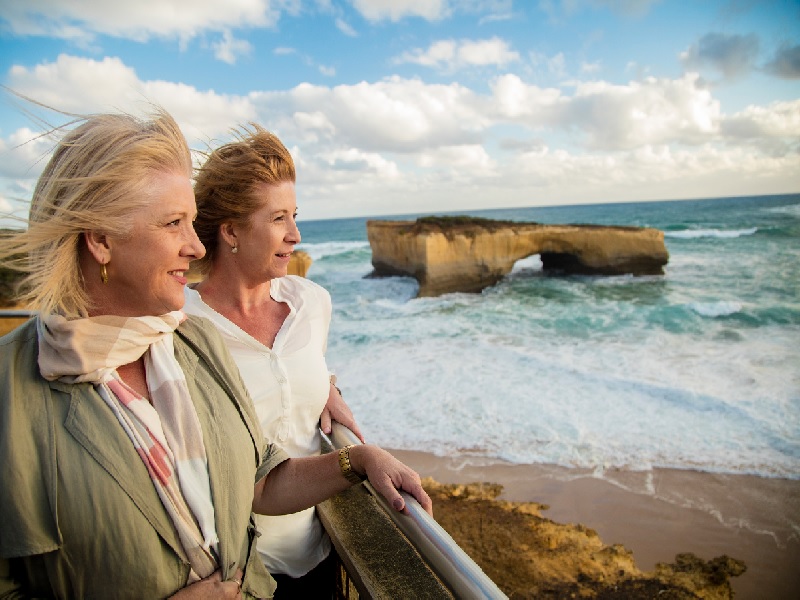
That said, if you want to properly explore the more remote regions and have time on your side, driving can be the better choice — you set your own pace and stop wherever catches your eye. In some cases, the drive genuinely is the highlight, and the Great Ocean Road is the textbook example: one of the most scenic coastal drives anywhere in the world.
One of the first big decisions when planning your Australian holiday is how you want to travel. There's no single "right" answer here — it really comes down to the kind of experience you're after and how much independence you want.
Escorted tour. An escorted tour takes the legwork out of planning — it's an all-inclusive group experience led by an expert guide, with hand-picked accommodation and a route that's already been thought through for you. You'll know most of your costs upfront, and because tour operators book in bulk, it can genuinely work out cheaper than arranging everything independently. It's a particularly good fit for solo travellers who like the idea of built-in company along the way.

Fly-drive tour. A self-drive tour gives you far more flexibility — a suggested route, but the freedom to be spontaneous within it. You fly into a region, pick up your hire car, and set your own pace, while still having the backing of expert planning and support behind you.

Multi-centre point to point. A multi-centre holiday lets you combine several of Australia's best sides in one trip — city energy, dramatic nature, and the Outback, for example a Red Centre, Sydney and Great Barrier Reef combination. It's the most efficient way to see a lot in a limited timeframe, and we build these with activities, accommodation and some meals already taken care of, so the logistics stay off your plate.
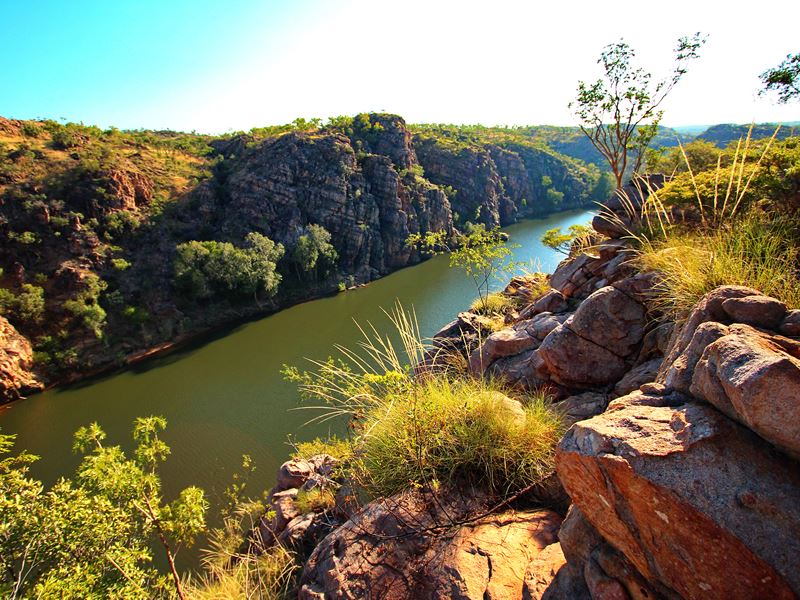
Australia is a country of genuine contrasts — vibrant multicultural cities, ancient rainforest, striking beaches, the red rock landscapes of the Outback, world-class vineyards, and of course the Great Barrier Reef. With so much on offer, we find the best way to choose where to go is to start with what you actually love doing.
Exotic wildlife. Australia's wildlife is one of its biggest draws, and rightly so — koalas, kangaroos, crocodiles and Tasmanian devils all in their natural habitat. Kangaroo Island, sometimes called Australia's own Galapagos, is a brilliant spot for this: kangaroos, koalas, wallabies and wombats alongside parrots, penguins, fur seals, dolphins and whales.

Queensland is another excellent choice, home to the Great Barrier Reef, where you can swim alongside dolphins and an extraordinary array of colourful fish, and explore coral cays. The Daintree Rainforest, north of Cairns, is one of the oldest surviving rainforests on Earth and home to a wide range of wildlife, including its famously well-adapted saltwater crocodiles.
Whale watching. Southern Queensland is one of the best places in the country for this, particularly around the coastal town of Hervey Bay. From August through November, the waters of Great Sandy Marine Park become a resting and feeding ground for humpback whales and their calves, with thousands passing through the region during the season.

Snorkelling and diving. The Whitsundays — 74 islands scattered along Queensland's tropical coast at the heart of the Great Barrier Reef — are one of the top spots anywhere for diving and snorkelling, with over 1,600 species of tropical fish alongside dolphins, rays, sea turtles, giant clams and reef sharks. Over in Western Australia, Ningaloo Reef is the place to swim with whale sharks, plus endangered sea turtles, dolphins, manta rays and even humpbacks.

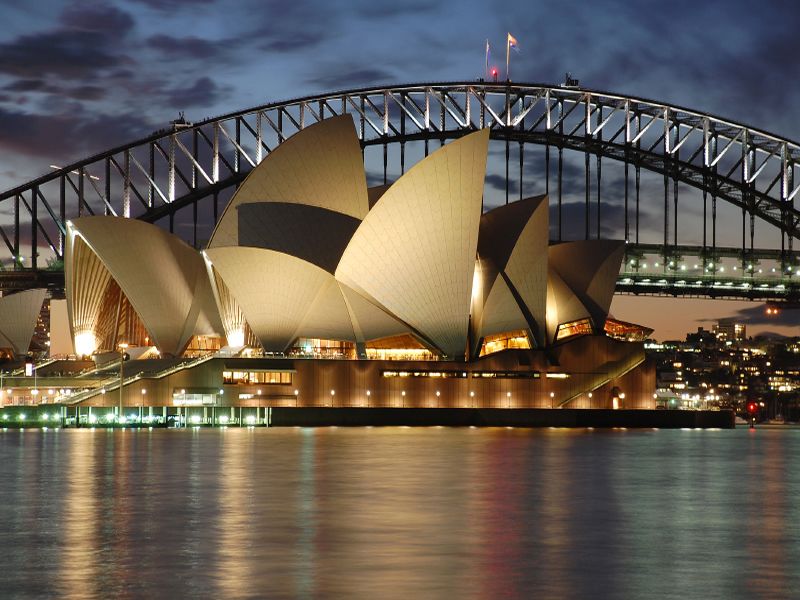
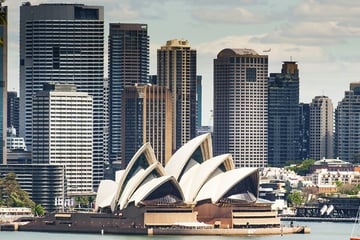
Modern culture. For city culture, Sydney and Melbourne both deserve a place on your itinerary. In Sydney, the Opera House's iconic white sails on Bennelong Point are unmissable, as is a walk across the Harbour Bridge and a trip up Sydney Tower — at 1,014 feet, it's the tallest structure in the city and the second-tallest observation tower in the Southern Hemisphere. Melbourne, meanwhile, is a genuine cultural melting pot, packed with museums, galleries, theatres and striking architecture.

Aboriginal culture. Exploring Australia's Aboriginal culture is something we'd encourage every traveller to build into their trip. Aboriginal Australians represent the world's oldest continuous living culture, with evidence placing their ancestors on this continent for at least 40,000 years, and some genetic studies suggesting closer to 65,000. One of the best places to experience this firsthand is Uluru-Kata Tjuta National Park in the heart of the Outback.

The vast sandstone monolith of Uluru has been the traditional home of the Anangu people for millennia, and they maintain a strong living connection to this land today. Visitors can witness traditions passed down through ceremony, song, ritual, art and dance, continuing largely as they always have.

Wine tasting and tours. There are several popular wine regions in Australia, with the Barossa Valley frequently named among the world’s best wine destinations. Located in South Australia northeast of Adelaide, it’s renowned for its award-winning local wines with some 70 wineries and over 80 cellar doors.

Food focused. Food lovers shouldn't miss Melbourne, consistently ranked among the world's best food cities. Expect an extraordinary mash-up of Eurasian street food, inventive food trucks, casual cafes and genuinely world-class fine dining. What stands out most is the sheer diversity — from Little Italy to one of Asia's oldest Chinatowns outside Asia itself, alongside Nigerian, Bangladeshi, Argentinian, Iraqi and Austrian influences, and plenty more besides.

How far in advance should I book an Australian holiday?
For peak periods — Australian summer (December to February) and school holidays — we'd recommend booking 6 to 9 months ahead to secure the best flights and hotel availability. For quieter shoulder seasons, 3 to 4 months is usually enough, though popular experiences like The Ghan or small-group tours can sell out further in advance.
Is it cheaper to book flights and hotels separately or as a package?
It depends on your route and dates, but package holidays booked through a specialist often work out more cost-effective than piecing everything together yourself, since tour operators negotiate bulk rates with airlines and hotels. It also means one point of contact if anything changes — which matters on a trip this long and complex.
What's the best time of year to visit Australia from the UK?
It genuinely depends on where you're going, since the country spans such a range of climates. Broadly, March to May and September to November (Australia's autumn and spring) offer milder, more comfortable conditions across most regions and avoid the most extreme summer heat in the interior.
Do I need a visa to visit Australia from the UK?
Yes, all UK visitors need a visa or Electronic Travel Authority (ETA) before travelling to Australia, even for short holidays. Requirements can change, so we'd always recommend checking the latest guidance directly with the Australian Government or your travel consultant closer to your departure date.
How many days do I need to see Australia properly?
Given the distances involved, we'd suggest a minimum of two to three weeks to properly cover more than one region without feeling rushed — for example, a week split between the Red Centre and Sydney, plus time on the Great Barrier Reef. Shorter trips work best focused on a single region, such as New South Wales or Western Australia.

Sign up to our newsletter
Be the first to know about our exclusive offers and holiday inspiration by email.